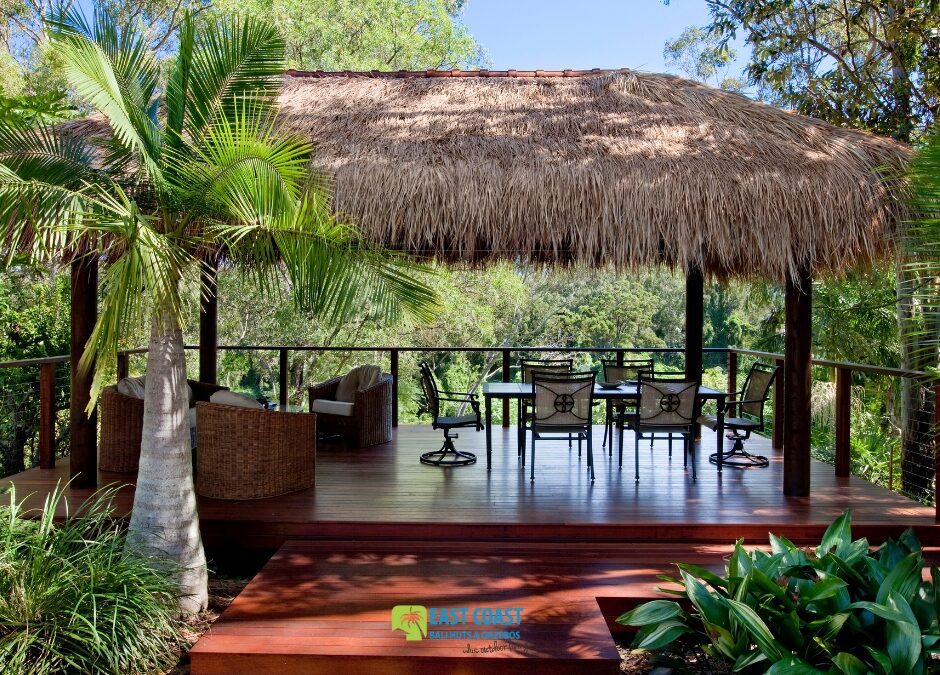
Choosing between a Bali hut and a traditional gazebo often comes down to a choice between tropical atmosphere and structured elegance. For most Australian homeowners, Bali huts offer superior natural insulation and a relaxed resort feel, while traditional gazebos provide a more formal aesthetic and versatile roofing options.
The decision should be based on your existing landscape design, your local climate, and how you intend to use the space. While both structures provide essential shade and an outdoor focal point, the materials and maintenance requirements differ significantly.
Understanding the Primary Differences
When you are looking to enhance your outdoor living area, the terminology can sometimes get a bit confusing. At their core, both structures serve the purpose of providing shelter, but their DNA is quite different.
A Bali hut is defined by its porous, natural thatch roofing. This traditional Balinese style is designed to breathe, allowing hot air to escape through the roof rather than trapping it underneath.
A traditional gazebo is usually a timber or metal structure with a solid, impermeable roof. These often feature shingles, colorbond steel, or tiles, creating a more permanent, architectural extension of the main home.
The Thermal Advantage of Natural Thatch
In the harsh Australian summer, temperature control is everything for outdoor comfort. Bali huts are naturally up to 10 degrees cooler than solid-roof gazebos.
-
The layered thatch allows for “natural convection,” where heat rises and dissipates through the grass.
-
The thickness of the thatch provides an incredible thermal barrier against UV rays.
-
You won’t experience the “oven effect” that can occur under metal or dark-tiled roofs.
Aesthetics and Visual Impact
Your choice will largely be dictated by the current “vibe” of your backyard. If you want to feel like you are on a permanent holiday, the Bali hut is the undisputed winner.
The Tropical Resort Style
Bali huts evoke memories of Southeast Asian retreats and beachside relaxation. They pair perfectly with:
-
Swimming pools and tropical plantings like palms or bird of paradise.
-
Natural stone pavers and timber decking.
-
Casual, low-slung outdoor lounges.
The Formal Gazebo Style
If your home has a classic or contemporary architectural style, a traditional gazebo might be more appropriate. Gazebos offer a structured, clean look that complements modern rendering and formal gardens.
-
They can be painted or stained to match the exact colour scheme of your house.
-
They often feature more intricate timber work, such as balustrades or decorative rafters.
-
They provide a more “built-in” appearance that feels like an outdoor room.
Durability and Maintenance in Australia
We often get asked about how these structures hold up against the wind, rain, and sun. Both structures are engineered for Australian conditions, but they require different care routines.
Maintaining Your Bali Hut
Many people worry that thatch is fragile, but high-quality Bali huts are incredibly hardy. A well-installed thatch roof can last 15 to 20 years with minimal intervention.
-
The steep pitch of the roof ensures that water runs off quickly, preventing rot.
-
You may need to give the thatch a light “groom” or trim every few years to keep it looking sharp.
-
The timber frame, usually treated pine or hardwood, requires the same oiling or staining as a standard deck.
Maintaining a Traditional Gazebo
Solid-roof gazebos are often seen as “set and forget” structures, but they still require attention.
-
Gutters and downpipes must be kept clear of leaves to prevent water damage to the timber.
-
Painted gazebos will eventually require a fresh coat of paint as the Australian sun causes fading.
-
Shingle or tiled roofs may occasionally need a pressure clean to remove moss or lichen.
Comparing the Costs
Budget is always a factor in any home improvement project. Generally speaking, Bali huts offer a more cost-effective way to cover a large area.
| Feature | Bali Hut | Traditional Gazebo |
| Initial Cost | Moderate | Higher (depending on roofing) |
| Cooling Power | Exceptional (Natural) | Moderate (Requires fans) |
| Lifespan | 15–20 years (Roofing) | 25+ years (Solid structure) |
| Installation | Fast & efficient | Can be complex |
| Property Value | High (Lifestyle appeal) | High (Architectural appeal) |
While a gazebo might have a higher upfront cost due to the complexity of the roofing materials, it often adds significant structural value to a property. Conversely, a Bali hut adds “lifestyle value,” making your home much more attractive to buyers looking for a personal sanctuary.
Versatility and Customisation
Both options allow you to tailor the structure to your specific needs. Whether you want a small 2×2 metre retreat or a massive 6×12 metre entertainment pavilion, we can customise the design.
Options for Your Space
- Decking: You can choose to have your structure built on a raised timber deck or directly onto a concrete slab or pavers.
- Privacy: We can add bamboo screens or timber slats to one or more sides to block out neighbours.
- Electricity: Both structures can be fitted with lights, power points, and ceiling fans to make them usable day or night.
The Verdict: Which One Suits You?
You should choose a Bali hut if you prioritise natural cooling and want to create a relaxed, tropical atmosphere. It is the perfect choice for poolside areas where the goal is maximum comfort during the hottest parts of the day.
You should choose a traditional gazebo if you want a structure that mirrors the formal architecture of your home. It is ideal for those who prefer a more permanent-looking outdoor room that can be fully integrated with gutters and downpipes.
Regardless of your choice, investing in a high-quality outdoor structure will transform how you use your backyard and increase the time you spend enjoying the fresh air.
Key Takeaways
-
Bali huts provide natural cooling that is superior to solid-roof structures.
-
Traditional gazebos offer a formal look that can be matched to your home’s existing architecture.
-
Thatch roofs are surprisingly durable, lasting up to two decades in Australian climates.
-
Gazebos provide a more permanent “outdoor room” feel and are often easier to integrate with guttering systems.
-
Both options add significant value to your property by enhancing the utility of your outdoor space.
Ready to Transform Your Backyard?
We specialise in creating premium outdoor spaces tailored to your lifestyle. Whether you are leaning towards the tropical charm of a Bali hut or the classic elegance of a gazebo, we are here to help.
Contact us today for a consultation or a quote:
-
Phone: 1300 575 550